Introduction
Time Schedule
Workshop Date: Friday 24 July 2026 (9:00-12:30)
Venue: Room 112
Program
The exact time schedule for each part will be announced soon.
Section 1: Welcome and Opening Remarks
Section 2: Invited Keynotes

Training Adaptive Search Agents for Dynamic Environments
Dr. Andrew Drozdov
Databricks
Abstract: This talk covers three directions toward adaptive search agents: using reinforcement learning to train large agents for slow, deliberative search, using reinforcement learning to train smaller models for fast search with parallel test-time compute, and evaluating agents in dynamic environments where questions and their answers change over time. The broader goal is to ask what the future of search should look like from both system design and evaluation perspectives, as search evolves from retrieving static results to powering interactive systems that increasingly rely on richer representations of fresh information, user context, and personalized information needs.
Bio: Andrew Drozdov is a Senior Research Scientist at Databricks, where he works on language-model-powered search, ranking, and grounded reasoning for knowledge-intensive tasks. His research spans information retrieval, efficient and scalable AI, and reinforcement learning, with a focus on modern search systems for both humans and agents. He received his PhD from the University of Massachusetts Amherst and his Master’s degree from New York University.
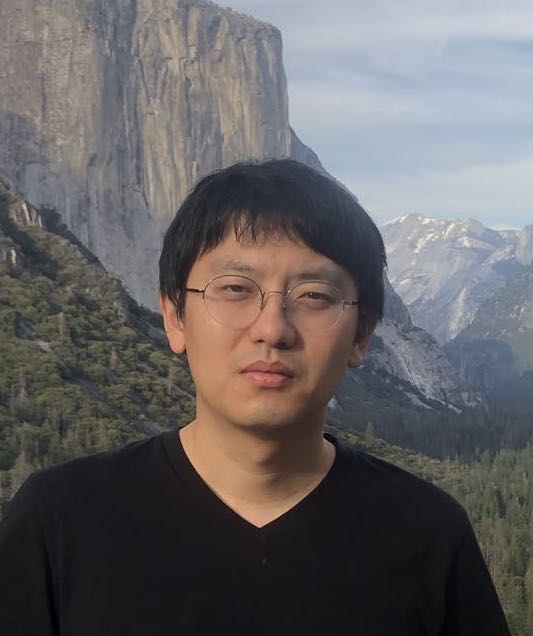
Generative retrieval: from search to recommendation
Prof. Zhaochun Ren
Leiden University, the Netherlands
Abstract: Generative retrieval is reshaping search and recommendation by embedding corpus knowledge directly within generative models. This emerging framework moves beyond traditional indexing, mapping queries and user contexts directly to document or item identifiers. In this talk, I will provide an in-depth overview of generative retrieval with recent key advancements. These methods are bridging the gap between search and recommendation by leveraging semantic representations that capture both content-based and collaborative signals. Building on recent studies, I will outline the core concepts, methodological innovations, and practical applications driving this field, and conclude by discussing open challenges and promising directions for future research.
Bio: Zhaochun Ren is an Associate Professor at Leiden University, the Netherlands. He is interested in information retrieval and natural language processing, with an emphasis on generative information retrieval and recommender systems. He aims to develop intelligent agents that can address complex user requests and solve core challenges in NLP and IR towards that goal. His research has been recognized with multiple awards at RecSys, SIGIR, WSDM, EMNLP, and CIKM. Prior to joining Leiden, he was a Professor at Shandong University and a Research Scientist at JD.com.
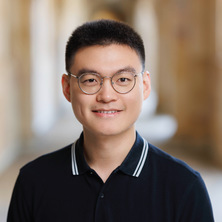
Do LLMs Introduce New Vulnerabilities to Recommender Systems?
Prof. Tong (Rocky) Chen
The University of Queensland
Abstract: Sequential recommendation is a fundamental task in recommender systems, which aims to estimate a ranked item list based on each user’s interaction history. Recently, large language model-powered sequential recommender systems (LLM-SRSs) have demonstrated remarkable performance by leveraging their natural strength in modelling interacted items as a sequence of textual descriptions. However, this paradigm also introduces new security vulnerabilities, particularly text-level manipulations, rendering them appealing targets for promotion attacks that purposely boost the ranking of specific target items. In this talk, I will present our recent work that investigates such new vulnerabilities by probing a mechanism for promotion attacks on LLM-SRSs. Distinct from existing studies that mostly rely on an unrealistic assumption of access to either the victim model or system prompt, our attack can operate in a real-world setting where both the system prompt and victim model are unknown. Our findings reveal critical security risks in modern LLM-SRSs even when both prompts and models are protected, and highlight the need for more robust defensive means. Following this study, I will further present a research agenda to discuss the technical landscape of secure recommender systems, and share my thoughts on the roadmap towards future research in this area.
Bio: Rocky (Tong) Chen is currently an Associate Professor with the Data Science Discipline at The University of Queensland. Rocky’s main research interests include recommender systems, LLM agents, graph and sequential data mining, and social media content moderation. To date, Rocky and his team have published 90+ peer-reviewed papers in the most prestigious, CORE A*/A-ranked conferences and journals like KDD, SIGIR, WWW, ICDE, ICML, ICLR, IEEE TKDE, and ACM TOIS. Rocky is an area chair of the KDD, WWW, and SIGIR conferences, and an associate editor of the Neural Networks Journal. His research contributions have received several recognitions, including the 2025 Brisbane Lord Mayor’s Trailblazer Award, 2024 CIKM Best Student Paper Award, and the 2023 ARC Discovery Early Career Researcher Award.
Section 3: Discussion with SIGIR'26 Authors
Section 4: Wrap-up and Closing Remarks
Workshop Chairs
- Prof. Hongzhi Yin, full professor and ARC Future Fellow at the University of Queensland.
- Dr. Wei Yuan, postdoc at The University of Queensland.
- Mr. Yi Zhang, PhD student at Anhui University.
- Dr. Joel Mackenzie, senior lecturer and DECRA Fellow at The University of Queensland.
- Prof. Quoc Viet Hung Nguyen, associate Professor at Griffith University.
- Prof. Wayne Xin Zhao, full professor at Renmin University of China.
- Prof. Yong Li, full professor at Tsinghua University.
- Prof. Lina Yao, full professor at UNSW.